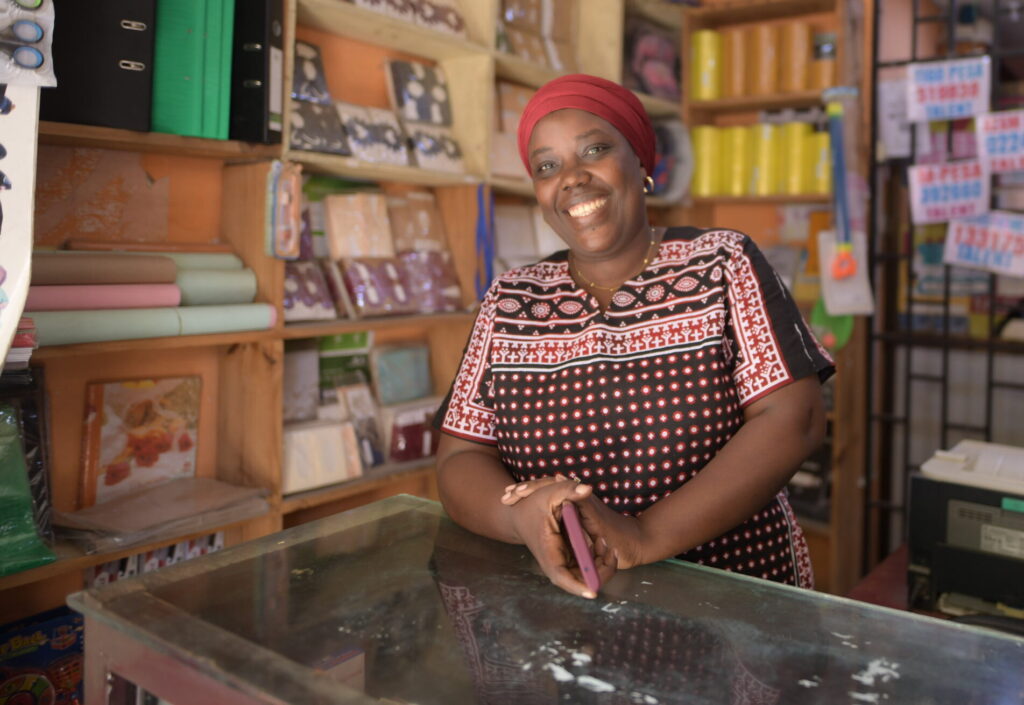
Every morning in El Alto, Bolivia, Yoselin has dozens of financial considerations to think about before her first customer arrives. How much oil should she buy this week? Will rising food prices cut into her profits again? Will there be enough left at the end of the month to support her family?
At just 26 years old, Yoselin runs a small storefront where she serves salchipapas — a local dish of sausage and fries — and hamburgers to her customers, primarily young people from the surrounding community. She started the business to generate additional income for her family, but like many first-time entrepreneurs, she quickly discovered that hard work alone is not always enough to sustain and grow a business.
Managing and tracking inventory was time-consuming, producing high-quality food for her growing customer base was demanding, and she also had to contend with rising costs for her ingredients, making planning unpredictable. And like many small business owners operating informally, she relied mostly on instinct to manage expenses and cash flow. That began to change when she connected with BancoSol, Accion’s longtime partner in Bolivia. Through BancoSol, Yoselin accessed a small business loan that helped stabilize her operations and invest more confidently in her business. She also participated in Ovante, Accion’s digital financial capability program supported by FedEx, designed for microentrepreneurs to strengthen financial skills and decision-making through practical, accessible learning.

For Yoselin, the impact was immediate. Before Ovante, budgeting was largely based on estimation and memory. Today, she tracks how much she spends on supplies, understands how much revenue she needs to cover expenses, and plans purchases more strategically. She has even hired an employee to help manage customer service as the business grows.
These may sound like small changes, but for entrepreneurs operating on very thin margins, understanding cash flow and planning ahead can make the difference between surviving week to week and building long-term stability. The Ovante modules, offered to BancoSol’s customers via an online mobile platform and delivered in workshops, have had immediate benefits for women entrepreneurs like Yoselin. It has also proved beneficial for her family, including Yoselin’s mother, who was unfamiliar with the concept of formal budgeting for her household and business finances.
Digital tools have further expanded Yoselin’s reach. Through WhatsApp groups, she now communicates with her customers to let them know when she’s open and what’s on the menu. Recently, Yoselin started experimenting with TikTok to attract new customers and build her brand.
In communities like El Alto, where many women entrepreneurs operate informally and face constant economic uncertainty, access to practical financial tools can have a huge impact. The challenge is often not lack of ambition, but lack of access to tools, systems, and support that help microentrepreneurs make informed decisions and plan for growth. That is where programs like Ovante can play an important role. By combining financial education with digital accessibility, the platform helps entrepreneurs build not only technical knowledge, but also confidence and agency.
With improved confidence and decision-making power, women entrepreneurs are better able to contribute to their household income and plan for the future. Yoselin is setting an example for other women in her community, demonstrating that small changes in financial habits can build resilience against economic uncertainty.
Ovante’s digital financial education, delivered in partnership with BancoSol, is more than just a learning platform; it’s a catalyst for positive change. Since 2020, Accion has launched Ovante in Mexico, Colombia, Bolivia, and India, reaching over 150,000 customers — two-thirds of whom are women.
Equipping microentrepreneurs with practical skills, confidence, and accessible tools enables them to thrive, adapt, and dream bigger in the face of adversity. For Yoselin, the transformation is deeply personal. She still faces rising costs and uncertainty, but today she approaches those challenges differently: with greater confidence, stronger financial habits, and a clearer vision for what her business, and her future, could become.

Explore More