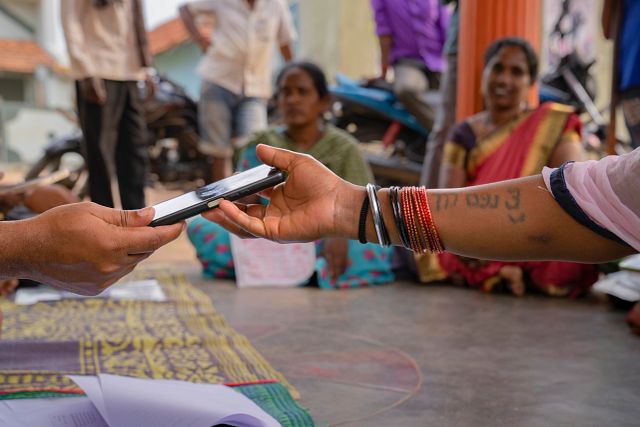
Alternative data is a collection of data points from non-financial sources that can paint a full picture of a customer’s financial life. To exist in this digitized world is to generate an ever-growing trail of data points. Activities as quick and benign as leaving a restaurant review, paying bills online, or sending money to a friend all serve as small indicators of behavior, reliability, and financial activity. These snapshots add up to become valuable alternative data.
Taken together, this kaleidoscope of data paints a picture of someone’s economic life. And, increasingly, alternative data can be used to connect underserved entrepreneurs with capital, reaching communities who have long been left out of the formal financial sector.
Why alternative data matters in emerging markets?
In emerging markets, micro and small enterprises account for approximately 90% of businesses and form the backbone of local economies. But the barrier of entry for many first-time borrowers remains precipitously high — not because they lack the ability to repay, but because traditional systems often lack the data needed to assess them.
For women, smallholder farmers, and microentrepreneurs across the globe, access to responsible loans is a critical first step in launching a viable venture, as well as a mechanism to earn a steady income, save for the future, and secure their financial wellbeing. Alternative data facilitates this progress.
How is alternative data used for credit scoring?
Alternative data refers to data sourced from non-traditional channels, which help paint a more holistic picture of an individual or a company’s economic activities and overall financial health.
For financial service providers looking to determine the creditworthiness of a customer, or for investors assessing the likelihood of future returns, alternative data fills the gaps left by traditional data sources, like credit bureaus or banks.
Because alternative data is generated constantly and comes from diverse, real-world activities, it often provides a more timely and contextual understanding of what’s happening on the ground.
Complementing traditional credit data
Rather than replacing traditional data, it typically complements it, leading to more accurate and inclusive credit decisions.
What are examples of alternative data?
Examples of alternative data include information from digital channels, like social media or online reviews, as well as evidence of financial activity, like a track record of mobile money transactions, online marketplace sales and purchases, or utility bill payments.
Alternative data can also include satellite imagery or geospatial data. For smallholder farmers seeking an agricultural loan or crop insurance, for example, these photos can capture valuable insight into crop health and yield or the severity of a natural disaster’s impact, all to better gauge what financial service best suits the farmers’ needs.
Alternative data in practice
One example of alternative credit data in action comes from Amartha, Indonesia’s largest person-to-person lender for ultra-microbusinesses. Amartha serves an active customer base of 1.8 million — all of whom are women. With Accion’s support, they developed an inclusive credit scoring models powered by machine learning that analyzes more than 800 variables, from digital channel usage to group meeting behavior. This level of insight enables Amartha to offer affordable working capital to women who are routinely excluded from formal credit due to discriminatory laws, cultural norms, or lack of collateral.
Why is alternative data for finance important?
Expanding access for people excluded from formal finance
Today, 1.6 billion people remain outside of the formal financial system, according to data from the World Bank. With thin or nonexistent credit histories and without documented assets, many remain statistically invisible to traditional lenders.
Alternative data helps make them visible. By incorporating behavioral and transactional data that reflects real economic activity, lenders can more accurately evaluate customers who would otherwise be overlooked, providing a pathway into the formal economy for women entrepreneurs, gig workers, rural households, and first-time borrowers.
Financial institutions harnessing alternative data often see higher approval rates, improved customer retention, and reduced credit losses, according to the International Committee on Credit Reporting.
When used responsibly, alternative data expands opportunities, furthering inclusion for buddingA entrepreneurs and enabling financial institutions to serve new segments safely and at scale.
How does Accion work with alternative data?
Supporting responsible and inclusive data use
Accion works with innovative partners to develop and scale responsible digital financial solutions for underserved people globally. A key portion of this work includes supporting inclusive finance platforms to leverage alternative data and advising institutions on how to responsibly use machine learning and alternative data to boost financial resilience for microentrepreneurs.
To connect low-income customers with the financial tools required to improve their lives, Accion finds and supports a diverse range of innovative companies across Asia, Latin America, sub-Saharan Africa, and the United States. In Asia, Africa, and Latin America, Accion supports providers in integrating data from digital wallets, e-commerce platforms, mobile money channels, and other sources to harness alternative data.
Partners like FlexiLoans in India and Moffin in Mexico demonstrate how these approaches scale. FlexiLoans uses alternative data to deliver fast, digital loans to underserved MSMEs, while Moffin enables financial institutions to seamlessly ingest and harmonize data from multiple sources without costly in-house engineering — making thin-file customers easier to assess.
As with any use of personal data, Accion works closely with its partners to ensure customer privacy, transparency, and fairness. Harnessing, analyzing, and verifying the immense quantity of alternative data requires the responsible use of technologies like natural language processing and image analysis; all with immense potential to drive inclusion for the millions at the margins of the financial system. But they also require deliberate safeguards to ensure trust and minimize risk. The Center for Financial Inclusion proposing policy recommendations for equitable AI, ensuring that data-driven finance protects customer’s rights and minimizes bias.
When business owners can access the capital they need, they can grow their livelihoods, support their families, and build resilient local economies. Accion’s work ensures that alternative data becomes a force for progress.
Alternative data is made up of non-traditional data sources that provide insight into an individual’s or business’s economic activity. This can include digital transaction histories, mobile money usage, utility payments, or online marketplace activity.
Alternative data helps lenders better assess customers who lack formal credit histories by reflecting real-world financial behavior. This can support more inclusive and responsible credit decisions for first-time borrowers and small businesses.
Traditional credit data is typically sourced from banks and credit bureaus and relies on formal borrowing history. Alternative data draws on a wider range of real-world activities, helping provide insight when formal credit records are limited or unavailable.
As with any use of personal data, protecting customer privacy, transparency, and fairness is essential. Responsible use of alternative data relies on informed consent, secure systems, and clear safeguards to ensure data-driven technologies are used in ways that build trust, protect customers’ rights, and minimize bias.
If not designed carefully, data-driven models can reflect existing biases. Ongoing monitoring and clear governance help reduce this risk and support fairer outcomes.
Regulation of alternative data varies by country and continues to evolve. In many markets, frameworks focus on consent, data protection, and fairness in data-driven financial services.
Alternative data is used by lenders, fintech companies, and investors to better assess risk and design financial products. It is particularly relevant in markets where many individuals and small businesses operate outside formal financial systems.
While customers may not interact with alternative data directly, its use can improve access to credit and financial services. When applied responsibly, it can lead to more accurate decisions and better-aligned financial products.
Accion works with partners to support the responsible usage of alternative data in digital financial services. This includes advising on governance, transparency, and the application of machine learning in inclusive finance.