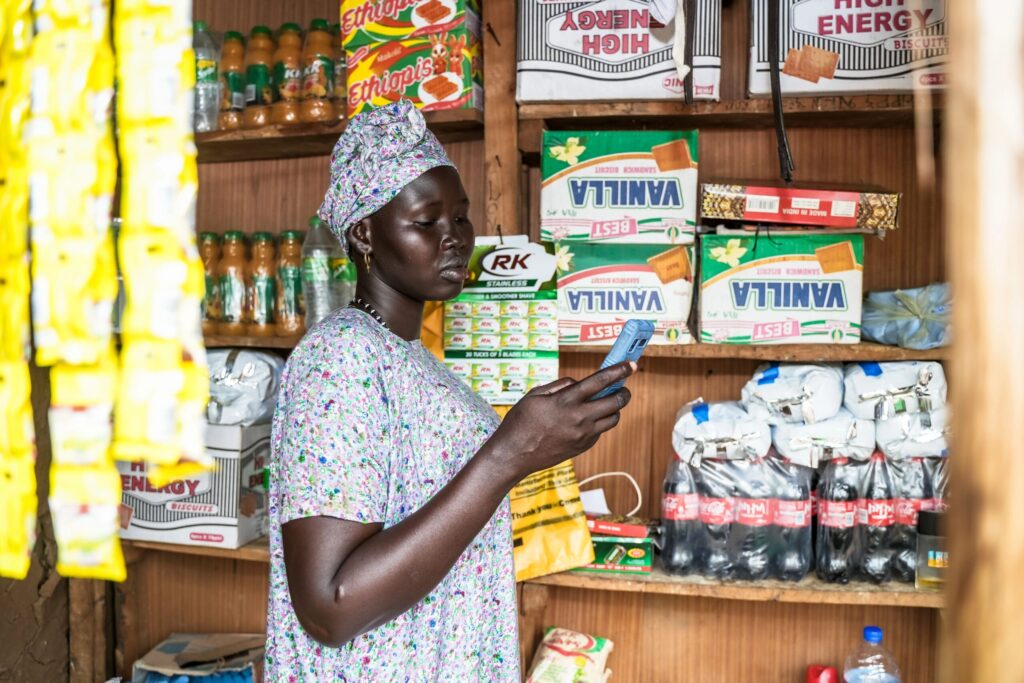
With global economies in flux, micro, small, and medium enterprises (MSMEs) remain highly vulnerable to price inflation and disruptions of local supply chains. This is especially true in markets within Latin America, for example, where MSMEs make up over 90 percent of all businesses, and inflationary rates can rank among the highest globally.
MSMEs often lack the financial resilience to withstand shocks. Limited supplier options, poor visibility on pricing alternatives, and restricted local demands restrict the choices MSMEs have when reacting to a crisis. This vulnerability is compounded by a lack of access to emergency capital. Our multimarket study revealed that 70 percent of surveyed MSMEs reported that accessing emergency funds was ‘somewhat difficult to impossible.’
With nearly half the world’s population accessing the internet, e-commerce platforms (digital marketplaces that connect buyers and sellers) now offer a powerful channel to strengthen MSME resilience. They can provide access to broader networks of suppliers and customers, enabling MSMEs to access better pricing, a broader selection of inventory, and wider catchment for demand when selling to consumers.
With nearly half the world’s population accessing the internet, digital ecosystems now offer a powerful channel to strengthen MSME resilience.
Despite this potential, the e-commerce industry is expanding at a rate that outpaces MSME participation. As global e-commerce grows at double-digit rates, millions of small businesses risk being left behind. This risk is particularly acute in specific geographies. African MSMEs, in particular, are adopting e-commerce at a slower rate than other regions.
Existing MSME procurement processes are often grounded in strong interpersonal relationships, making it difficult to migrate them onto digital platforms. Many require a significant level of support before they trust digital channels, notwithstanding the clear benefits of inventory purchase and selling potential. The adoption gap risks leaving many small businesses behind in the digital economy and increases the risk of disintermediation by new modern trade alternatives.
Through the Accion and Mastercard Center for Inclusive Growth partnership, we are supporting MSMEs across Africa, Asia, and Latin America to benefit from participation in digital trade ecosystems. Partnering with financial service providers (FSPs) and e-commerce platforms, our efforts are aimed at identifying key barriers to adoption and implementing new product and service offerings that address them through responsible, scalable, and sustainable business models.
Informed by market and proprietary research, our approach has been guided by an implementation framework that prioritizes:
- Designing experiences which are empathetic to the complexities of general trade: Conducting deep user research in each market to map out the contextual and industry-specific drivers of and barriers to adoption, and designing e-commerce experiences empathetic to cultural nuances.
- Maximizing usage by integrating access to payments and capital within digital transaction flows: We use alternative data sourced from online and offline interactions to provide MSMEs with embedded credit that enables them to take advantage of a wider choice in inventory supply. Where appropriate, we are leveraging digital payments to enable seamless value transfer.
- Engineering sustainable business models: We focus on supporting asset-light e-commerce platforms, or platforms that operate without owning or holding inventory, and integrate with existing stakeholders within general trade ecosystems to diversify concentration risk and help businesses unlock digital trade’s full value — better pricing, smarter insights, and smoother logistics.
- Facilitating partnerships for scale: We curate mutually beneficial partnerships between e-commerce platforms, logistics providers, Value Added Service (VAS) operators, distributors, wholesalers, and others, which incentivize participation appropriately.
Although our work is ongoing, early insights reveal promising results. In an assessment of MSMEs using e-commerce embedded finance supported by the program, 80 percent reported more independence and autonomy in running their business, with nearly 75 percent reporting that embedded credit offerings provided increased resilience to supply chain shocks.
By reducing barriers for MSMEs to access and use platforms, embedding tools — particularly financial ones — that help firms withstand shocks, and building sustainable, scalable implementation models, we aim to demonstrate what drives success in using e-commerce to strengthen MSME financial health.
Accion, along with the Mastercard Center for Inclusive Growth, is committed to bridging the digital divide for MSMEs — and the even greater one faced by women-owned enterprises — by combining digital commerce with financial inclusion. In this overview, we have underscored why the issue matters, how Accion and the Center are positioned to act, and where the journey of inclusive digital commerce is likely to go next. Through this series, Accion will share learnings and evidence from its global interventions to show how inclusive e-commerce can empower MSMEs to thrive in a digital economy.
Up Next
Episode 2 | Overcoming barriers to adoption
We will examine why MSMEs hesitate to join e-commerce platforms, from catalog frictions to fears of competing with larger players, and share lessons from interventions that lowered these barriers.
Explore More






Get in touch
Contact Accion Advisory
We work to transform the lives of underserved people and small businesses around the world through digitally enabled products and services that improve financial health and resilience. If you share this vision, let us know how we can work together.