Women and women entrepreneurs are among the most excluded populations of the global financial system. To fully achieve women’s inclusion in the formal economy, financial institutions must go beyond providing access to the services that women need to grow business and improve their livelihoods — they must design services that are tailored to meet their needs.
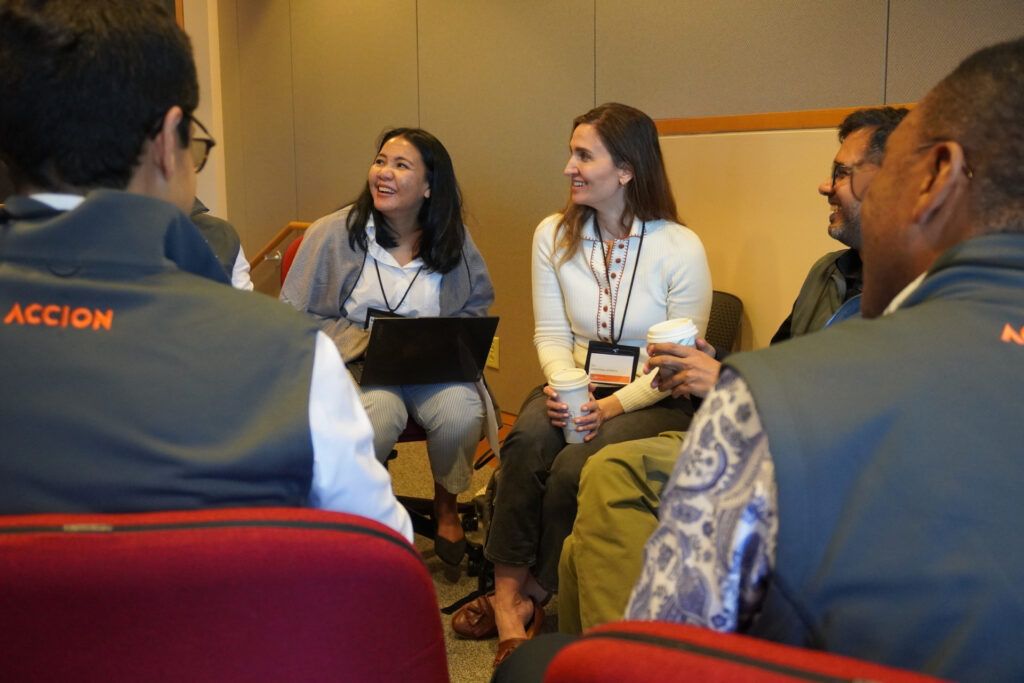
Last year, I spoke with five financial sector leaders who are working to do this. These experts are all graduates of the 2025 Harvard Business School (HBS)-Accion Program on Strategic Leadership in Inclusive Finance, which brought together 77 leaders from 38 countries to the HBS campus in Boston for a week of diving into case studies and advancements in financial inclusion, digital technology, impact investing, and beyond.
These five leaders, representing regulatory entities, insurance companies, banks, microfinance institutions, and more, shared how they are working to invest in women entrepreneurs across the world, and create services that women entrepreneurs can trust with their financial futures.
Addressing barriers for women
Women often face unique environmental obstacles to their economic participation, which providers must take into account when working to serve them.
In Bangladesh, social stigma is a significant issue that financial service providers encounter when designing services with women in mind. “In general, women are less likely to go out in the evenings, after work, or visit a bank branch,” explained AGAM.ai founder Shabnam Wazed.
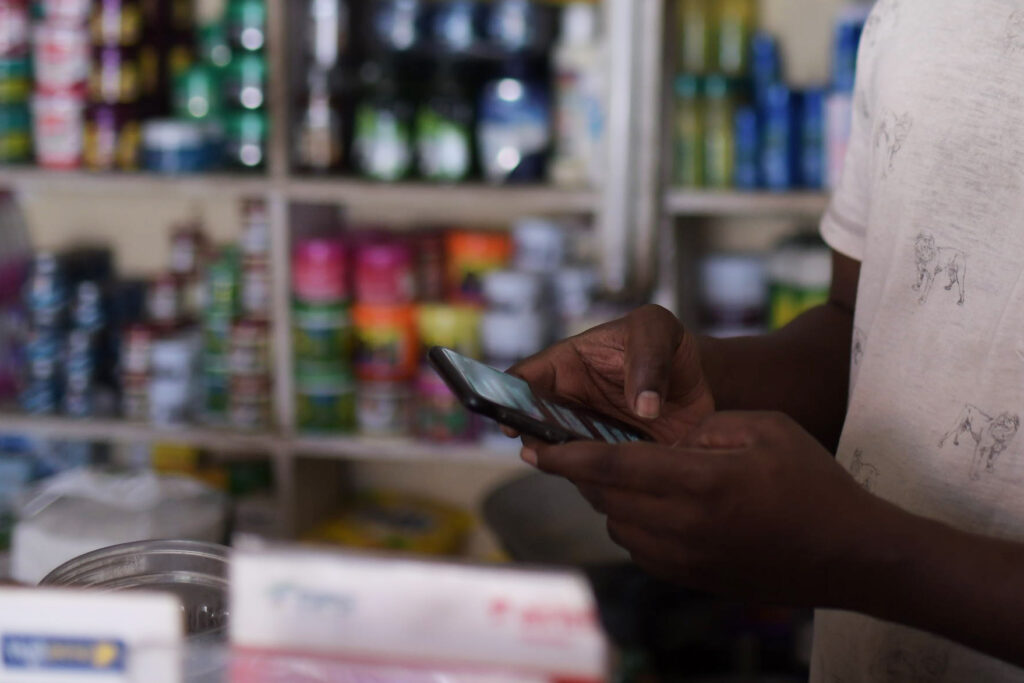
AGAM.ai is a startup dedicated to enabling quick access to credit and savings through a smartphone. They promote financial inclusion for employees and small business owners across Bangladesh, with a focus on facilitating savings accounts for women employees and entrepreneurs.
The company helped one local provider eliminate mandated branch visits to open an account, allowing rural women users to make an account from the comfort of their homes. “Women employees and entrepreneurs can apply in just a few taps and receive a credit decision in minutes. They don’t have to visit a branch, or rely on supervisors or informal sources,” said Wazed. “When access to emergency funds is fast, private, and transparent, it gives women greater confidence, independence, and control over their financial lives.”
Vitas Palestine, which provides financial services to low-income clients across Gaza and the West Bank, has encountered a distinct challenge in advancing women’s financial inclusion. “In our cultural context, many women are not always comfortable taking a selfie for digital ID verification,” said Amer Hidmi, General Manager.
Because selfie-based verification is commonly required to open a digital account, Hidmi noted that a significant number of women abandon the registration process at this stage. “When a technological requirement unintentionally becomes a social barrier, we must adapt,” he explained. “Financial inclusion cannot come at the expense of cultural sensitivity.”
In response, Vitas Palestine developed alternative verification pathways that enable women to complete onboarding without the need for a selfie. By redesigning the process rather than expecting clients to adjust to it, the institution reduced friction and preserved access.
“It is important to us to actively incentivize women to participate in the financial system,” Hidmi added. “True inclusion means customizing our solutions to meet clients where they are, not where we assume they should be.”
Creating women-driven solutions
Leaders also highlighted the importance of incorporating women’s perspectives when creating the financial tools and products that serve them. The earlier women are involved in these conversations, the better.
Claudia Hoyos Peniche, Emerging Customer & Partnerships Strategy at AXA, the global insurance provider, emphasized the importance of including women in every phase. “In Mexico, we are trying to integrate women in financial decisions, not only with the products we sell, but as decision makers. We can then build insurance options that can provide better coverage for women, and health products that help women feel more integrated in the financial system.”
She added, “We also participate in women’s forums to learn more about their needs.”
Meanwhile, Antoinette Machiya, former Head of Payments for Retail Banking at Absa and now Founder and CEO of Kuhuula Services, is advancing a more systemic approach to women’s economic empowerment. Her work in Zambia and across the region goes beyond access to bank accounts and digital loans to tackle the deeper, structural barriers that hold women entrepreneurs back.
Through Kuhuula (which means “growth” in Lozi, a local language in Zambia), Machiya is building inclusive capacity-building platforms tailored specifically for women and youth-led enterprises. The approach brings together practical business skills development, access to mentorship, coaching and peer networks, and ecosystem partnerships that connect women entrepreneurs to real growth opportunities.
“Access to finance alone is not enough,” said Machiya. “Women entrepreneurs need intentional, well-designed capacity building, access to trusted networks, and ecosystems that recognize and address the structural constraints they face. When we invest in women’s capability, confidence, and connections, we unlock sustainable growth — not just for individual businesses, but for entire communities.”
In Indonesia, the gender disparity in accessing credit is not that significant, but most micro and small enterprises (MSE) are women-owned. According to Rosnita Wirdiyanti, Deputy Director of Information Analysis and Cooperation for Market Conduct Supervision, Education, and Consumer Protection at the Indonesia Financial Services Authority (OJK), women are the primary beneficiaries of government business loans.
“Government loans for MSEs are indirectly aimed at women entrepreneurs,” Wirdiyanti elaborated. “Women make up more than 90 percent of the recipients of our ultra micro loan program, a program that grants loans up to $400, on average. These recipients usually own food stalls or marketplaces.”
Maximizing community impact
By considering women’s financial, cultural, and professional needs, financial leaders have the opportunity to uplift a historically underserved demographic — and unlock inclusive economic growth for entire communities.
“We must design products that are both appropriate and affordable for women, empowering their business skills. This results in an economic growth ripple effect,” said Machiya, reflecting on the importance of women-focused financial solutions. “We say it takes the whole village to raise a child. By empowering one woman, we can impact a village.
The 2027 HBS-Accion Program on Strategic Leadership in Inclusive Finance will take place April 4-9, 2027. Applications for the program will open in July 2026. To be among the first to receive updates about the 2027 program application cycle, sign up here.